Rhetorical blogs
Here I am going to write a rhetorical analysis of first blog. This blog is about some basic concepts in national measures about climate change.
Climate Action for Today and Tomorrow: The Relationship between NDCs and LTSs
Kelly Levin; Taryn Fransen

The blog original source: https://www.wri.org/news/climate-action-today-and-tomorrow-relationship-between-ndcs-and-ltss

At present, climate is one of the important issues facing humankind. We need to take some necessary measures, otherwise environmental degradation will pose a great threat to human development. A few years ago, the environment was deteriorating much faster than people thought. In the last five years, many measures have been taken to prevent climate change. Until now, many countries have started to make nationally determined contributions and have long-term plans. This blog is a discussion and reflection on some nationally determined contributions and long-term plans. Here I will analyze this blog from several aspects of 6 categories of rhetorical analysis and planing.
First and foremost, the purpose of this blog is to outline the various actions taken by different countries on climate change. It mainly starts from two aspects, namely Nationally Determined Contributions (NDC) and Long-Term Strategies (LTS). In the process, it also fully explained these two concepts. The differences between the two measures are also compared. So this blog hopes to draw people’s thinking about the current measures mainly from these two concepts.For example, this blog mentions that in the current situation, long-term plans are no longer unfamiliar to many countries, and they have made long-term plans for future measures and goals. Subsequently, some countries’ long-term plans are also listed and elaborated. Therefore, after reading this blog, it is not difficult to find that the main purpose of this blog is to use these two concepts to cause people to think about the measures taken on climate change.Further, the author of this blog talked about the difference between LTS and NDC, and clarified the necessity to coordinate these two aspects. At the same time, this blog post also mentions some challenges now and in the future.
Next I will analyze this blog from the perspective of the intended readers. In fact, this is obvious. The target group of this blog is mainly those who are interested in climate change and also concerned about national measures. Of course, the bloggers of this blog also hope to attract more people to the issue of climate change. However, what is discussed here are some professional knowledge issues, including the differences between nationally determined contributions and long-term strategies. Therefore, the intended readers also need to have some expertise in related areas. At the same time, this blog is mainly to solve people’s doubts about different concepts of some measures. For example, this blog mentioned that the period of NDC is generally five years, and the time span of LTS will be longer. For example, the time span of long-term planning made by Japan, Canada, the United States and other countries is to 2050. Therefore, this blog explains every concept in great detail. The intended readers of this blog can be defined as those who focus on the country’s climate change measures and seek to solve basic conceptual issues.
In this blog analysis, I mainly analyze this blog from two aspects: purpose and intended audience. This blog is used to inform the public about the country’s response to climate change. So it is very thoughtful about the intended audience, which is also more prominent.
The problem of climate change is now very serious, especially for some developing countries. It is particularly important that developing countries take measures to address climate change and whether they have the resources and tools they needThe problem of climate change is now very serious, especially for some developing countries. It is particularly important that developing countries take measures to address climate change and whether they have the resources and tools they need. Here I will analyze this blog in the aspects of the evidence and information.
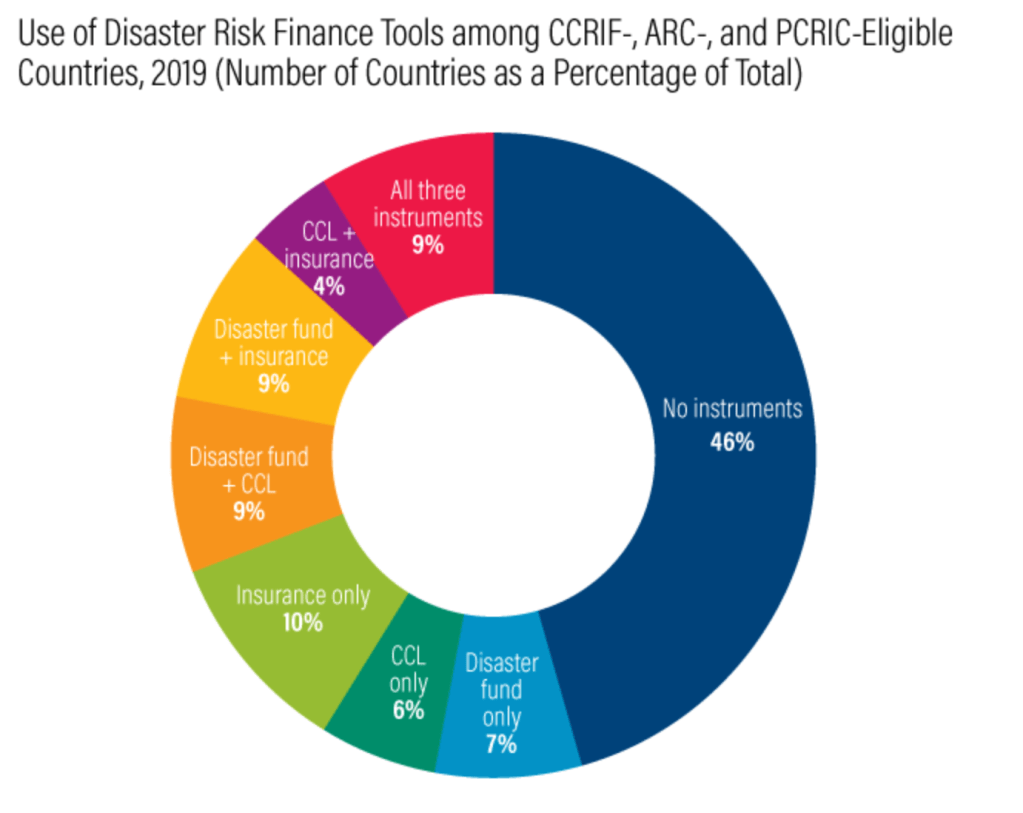
First, the first aspect of this analysis is about the type of evidence. This blog uses many types of evidence. For example, when it comes to the impact of climate change on developing countries, it illustrates the specific situation. In this part, he writes that “earlier in 2019, Tropical Cyclone Idai struck East Africa, disrupting the lives and livelihoods of over 1.5 million people in Mozambique alone and causing over $2 billion inn losses. In 2018, Tropical Cyclone Gita hit the small Pacific island of Tonga, impacting almost 80 percent of its population and damaging or destroying nearly 5,000 homes”. Here, he used lots of specific data information. This a type of evidence called statistics and statistical analysis. At the same time, he also described the specific method, such as “Parametric means that the insurance relies on risk modeling rather than on-the-ground damage assessments to estimate the cost of disasters”. The blog explains in detail the concept of sovereign parametric insurance and mentions how developing countries can use it to safeguard their own interests and reduce disaster losses. We can define this evidence in the type called description of methods.
Next, we will analyze this blog from the perspective of order of information.The order of information is often greatly related to the importance of the information. As written in the writing science book, the order of information in a blog is how the author wants readers to read it. To attract readers, authors often put the most important information at the beginning. In this blog, the author first wrote about the impact of Hurricane Dorian on people’s lives. Hurricane Dorian is one of the biggest disasters in recent years and one of the hot issues of the environment. Based on this topic, the author thus described how developing countries are facing climate change and some related measures.At the same time, in the beginning topic, he wrote about the Importance of fast payouts, which is also the most specific measure written by the author. Increasingly, developing countries rely on this measure to reduce disaster losses. The author hopes that readers will pay more attention to climate change measures in these developing countries. Putting this item at the beginning also points out its importance.
The most impressive thing about this blog is that it has a lot of data. This blog has a lot of evidence, so for the analysis of this blog, I mainly analyze its type of evidence and the order of information. From these two aspects, we can see that these two factors determine what form the author hopes to present to the reader. At the same time, it is not difficult to conclude that these factors are also closely related to the importance of information, because important things are often put in the beginning to attract readers
Rhetorical blogs
Here I am going to write a rhetorical analysis of first blog. This blog is about how developing countries face climate change.
Climate Disasters Are Getting Worse. Here’s How Developing Countries Are Insuring Against Them
Martinez-Diaz, Lauren Sidner and Jack McClamrock
The blog original source: https://www.wri.org/blog/2019/09/climate-disasters-are-getting-worse-heres-how-developing-countries-are-insuring-against
Citation:
Kelly Levin; Taryn Fransen, “Climate Action for Today and Tomorrow: The Relationship between NDCs and LTSs”
Martinez-Diaz, Lauren Sidner and Jack McClamrock, “Climate Disasters Are Getting Worse. Here’s How Developing Countries Are Insuring Against Them”
Christopher Thaiss, “Writing science in the twenty-first century”
 Kun's blogs